The tire pressure light always seems to appear at the worst possible moment—on a cold Northeast Ohio morning, running late, with snow in the forecast. That small dashboard icon can leave drivers wondering if it’s safe to keep going, whether a tire is actually flat, or if it’s just the weather messing with their sensors.
Understanding what tire pressure monitoring systems (TPMS) are telling you, how direct and indirect sensors work, and how temperature swings affect tire pressure helps you respond calmly and safely. You’ll see what the light really means, the exact steps to take when it comes on, how winter in Cleveland can trigger warnings, and when it’s time to call a mobile tire service like Tires2You instead of trying to handle it on your own.
That little tire pressure light on your dash isn’t just a nagging reminder—it’s your car’s way of warning you that every mile could be costing you safety, performance, and money, especially if you’re rolling on an EV or managing a busy fleet. In Cleveland, services like Tires2You turn that warning from a headache into a quick, on‑site fix, keeping your vehicles road‑ready without ever stepping foot in a shop.
Reference: Tire Pressure Warning Light Came On | What to Do
What Does the Tire Pressure Light Mean? How to Fix It
Introduction and Why Your Tire Pressure Light Matters
Picture a Cleveland commuter leaving Lakewood at 6:30 a.m. on a January morning. The temperature has dropped from 40°F to 10°F overnight, they merge onto I‑90, and a yellow horseshoe-shaped light with an exclamation mark suddenly pops up on the dash. The car feels normal, but the tire pressure warning light raises an instant worry: “Is it safe to keep driving?”
That small light is more than a nuisance. Your tire pressure monitoring system (TPMS) is an early warning safety net designed to alert you when at least one tire is well below the recommended pressure. The National Highway Traffic Safety Administration (NHTSA) notes that underinflated tires increase crash risk because they reduce traction, lengthen braking distances, and hurt emergency handling.
When tires are at the proper PSI, the tread contacts the road evenly. This helps your ABS and stability control work correctly during sudden stops or on icy Northeast Ohio roads. On a slushy stretch of I‑480, a properly inflated tire can mean the difference between a controlled stop and sliding into the car ahead of you.
Correct pressure also protects your tires from premature wear and structural damage. Underinflation flexes the sidewalls more than they’re designed for, which builds heat and can lead to blowouts, especially at highway speeds. A delivery van running 20% low on pressure day after day might wear out tires months earlier than expected, turning a small oversight into a costly replacement bill.
For EV owners in Cleveland, Akron, and surrounding areas, tire pressure has a direct impact on range. Underinflated tires increase rolling resistance, forcing your Tesla Model Y or Ford F‑150 Lightning to pull more power from the battery. The U.S. Department of Energy estimates that properly inflated tires can improve gas mileage by up to 3%; the same principle applies to EV range.
Fleet managers feel this even more. A last‑mile delivery fleet with 25 vans running underinflated tires can see higher fuel or electricity costs, more roadside breakdowns, and unplanned downtime. A single tire failure on an Amazon-style route can throw off delivery windows and require towing, emergency replacement, and overtime payroll.
Your TPMS works silently in the background. Direct TPMS uses small sensors mounted inside each wheel to read actual PSI and transmit it to the car. Indirect TPMS, used on many Volkswagen and Honda models, relies on ABS wheel-speed sensors to detect changes in tire circumference that suggest low pressure. Both systems trigger the same warning light when something is wrong.
When that light turns solid and stays on, it means at least one tire is significantly below the manufacturer’s recommended PSI—usually 25% or more under spec. Ignoring it can turn a simple top-off into a flat tire, damaged wheel, or even a highway blowout, especially after hitting one of Cleveland’s notorious winter potholes.
This guide explains what the tire pressure light really means, why it often appears when temperatures plunge in Northeast Ohio, and how to respond step by step. You’ll learn how to check and fix the issue yourself, how direct and indirect TPMS behave differently, and when it’s smarter and safer to call a professional mobile service like Tires2You for on-site help at your driveway, office lot, or fleet yard.
Quick FAQ: Common Tire Pressure Light Questions
Does cold weather cause the tire pressure light?
Yes. A 10°F drop can lower pressure by about 1 PSI. When temps swing from 45°F to 15°F overnight in Cleveland, borderline-low tires can trigger the light in the morning even if there’s no leak.
Is it safe to drive with the tire pressure light on?
You can usually drive a short distance at moderate speed to a safe location or air pump, but you should not ignore the light. If the car pulls to one side, the steering feels heavy, or you hear flapping or thumping, pull over immediately and inspect the tires.
Do I need a shop visit to fix it?
Not always. Many issues are solved by inflating to the door-jamb PSI and resetting the TPMS (especially with indirect systems that require a manual reset). If the light keeps coming back or you find damage, scheduling mobile service from a provider like Tires2You can resolve the problem without a trip to a tire shop.
1. Understanding Your Tire Pressure Light and TPMS System
1. Understanding Your Tire Pressure Light and TPMS System
What the Tire Pressure Light Symbol Looks Like
Most modern vehicles use a universal tire pressure warning icon so drivers instantly recognize a potential problem. On your dashboard’s instrument cluster, it typically appears as a yellow, horseshoe-shaped symbol with an exclamation point in the center, resembling a cutaway view of a tire. Consumer Reports notes this symbol as the standard TPMS warning icon.
Some newer EVs, like certain Tesla Model 3 or Hyundai Ioniq 5 trims, may supplement the icon with text such as “Low Tire Pressure” or “Check Tire Pressure.” In a Chevrolet Bolt or Ford F-150 Lightning, you might see a pop-up message plus the TPMS symbol, especially during cold snaps in Northeast Ohio. Whether it’s the icon, text, or both, any tire pressure warning deserves quick attention.
Depending on the issue, the light may stay on steadily or flash before becoming solid. A steady light usually points to low air in one or more tires, while flashing typically suggests a system fault instead of a simple pressure drop. Understanding that difference helps you decide whether to grab a gauge first or schedule TPMS service with a provider like Tires2You.
Steady vs. Flashing Tire Pressure Light
When your tire pressure light comes on and stays solid, the system is telling you at least one tire is below the programmed threshold. In many vehicles, this threshold is roughly 25% under the recommended cold PSI listed on your door jamb. For example, if your Nissan Leaf specifies 40 PSI, the TPMS might trigger around 30 PSI or slightly higher.
A flashing tire pressure light—often blinking for 30 to 90 seconds at startup before remaining on—usually indicates a TPMS malfunction. That could mean a dead sensor battery, a failed sensor after a Cleveland pothole impact, or a communication problem in the receiver module. In a fleet of delivery vans, you might see this when multiple sensors age out around the same time.
Both situations require attention, but they call for different responses. With a steady light, the first step is to manually check all four (or more) tires with a quality gauge and adjust to the recommended cold PSI. With a flashing light, especially if pressures measure correctly, it’s wise to schedule a TPMS diagnostic so a technician can scan the system and test each sensor.
How the Tire Pressure Monitoring System (TPMS) Works
TPMS is designed as an early-warning safety system, not a replacement for routine pressure checks. It continuously monitors tire pressure and triggers the warning when pressure drops roughly 25% or more below the manufacturer’s recommended cold setting, not the maximum PSI printed on the tire’s sidewall. This helps protect traction, braking, and tire life long before a tire looks visibly low.
There are two main TPMS types. Direct TPMS uses pressure sensors mounted inside each wheel—common on EVs like the Tesla Model Y and fleet vehicles such as Ford Transit vans. These sensors transmit real-time pressure data to the car’s computer. Indirect TPMS, found on some Volkswagen and Honda models, relies on wheel-speed sensors from the ABS system to infer low pressure when a tire’s rolling diameter changes.
Because thresholds are calibrated to your door-jamb label, a 10–15°F overnight temperature drop in a Cleveland winter can lower each tire by 1–2 PSI and nudge the system into warning range. That’s why drivers often see the TPMS light on cold January mornings along I-480, even though there are no punctures—just naturally contracted air that needs a top-off.
Step-by-Step: What to Do When the TPMS Light Comes On
-
Confirm whether the light is steady or flashing. Start the vehicle and watch the icon for at least 90 seconds. If it stays solid, you’re likely dealing with low pressure; if it flashes then stays on, suspect a TPMS fault.
-
Park safely and check pressures cold. Use a reliable digital or dial gauge on all tires, including the spare if equipped. Compare readings to the driver’s door-jamb sticker—never the tire’s sidewall rating.
-
Adjust air to recommended PSI. Add or release air so each tire matches the specified cold PSI. After driving a few miles, many systems will automatically reset if pressures are corrected.
-
For indirect TPMS, perform a system reset. On models like certain Subaru or VW vehicles, use the menu or reset button (often in the glovebox or infotainment settings) after setting pressures correctly so the system relearns the baseline.
-
If the light flashes or stays on after correction, schedule service. A mobile provider such as Tires2You can come onsite to your EV or fleet yard, scan for TPMS fault codes, test sensors, and replace failing units without taking vehicles out of rotation.
Risks of Driving With Low Tire Pressure
Underinflated tires flex more as they roll, generating excess heat that can damage the internal structure. On the Ohio Turnpike in August, that extra heat can push a weak tire into a blowout or cause sidewall bubbling. The National Highway Traffic Safety Administration has linked chronic underinflation to thousands of tire-related crashes each year in the U.S.
Low pressure also reduces your tire’s contact patch effectiveness. Stopping distances grow longer, and the risk of hydroplaning increases, especially in Northeast Ohio’s mix of lake-effect snow, slush, and standing water. A Cleveland commuter in a Chevy Equinox on I-90 with tires 8–10 PSI low will feel looser steering and poorer grip in heavy rain or snow.
For EV owners, low tire pressure directly hurts range. A Tesla Model S or Nissan Ariya running 6 PSI low on all four tires can lose several percent of battery efficiency because of added rolling resistance. For fleet managers, this translates into higher energy or fuel costs and accelerated, uneven wear that forces premature tire replacement—impacting budgets and vehicle availability.
FAQ: Common Questions About Tire Pressure Lights and TPMS
Why does my TPMS light come on only in cold weather? In Cleveland winters, a 30°F temperature drop can reduce tire pressure by 3–6 PSI. That’s often enough to cross the TPMS threshold overnight, especially if your tires were already a bit low.
Is it safe to ignore the light if the car still feels normal? No. Many tires look and feel “okay” but are 5–10 PSI underinflated. Always verify with a gauge and correct the pressure. Treat the TPMS light as a safety warning, not just a suggestion.
Can I keep driving if the TPMS system itself is malfunctioning? You can drive cautiously, but you’ll lose an important safety net. Until a technician diagnoses the sensors or control module, check pressures manually at least once a week, especially before highway or long-distance trips.
2. Direct vs. Indirect TPMS: Why It Matters When the Light Comes On
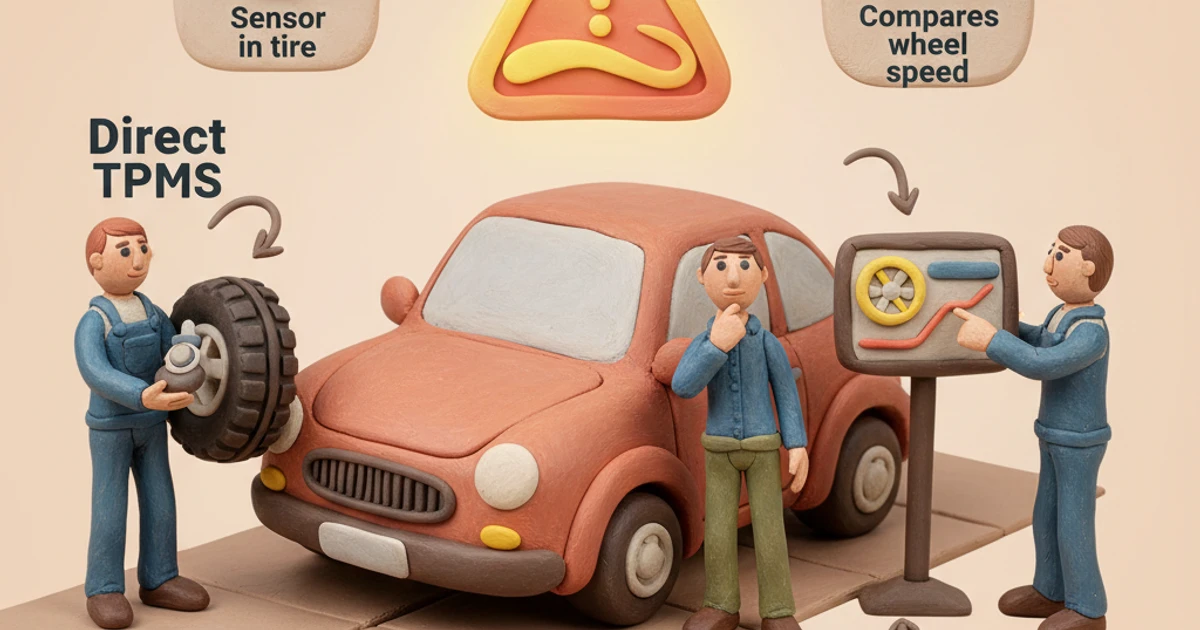
2. Direct vs. Indirect TPMS: Why It Matters When the Light Comes On
What Is Direct TPMS?
Direct TPMS is the setup most newer EVs and higher-trim vehicles use, and it’s especially common on Teslas, Ford F-150 Lightnings, and late‑model Hondas and Toyotas. The system relies on small electronic sensors mounted inside each wheel, usually built into the valve stem, to read the actual air pressure in that specific tire.
Each sensor sends wireless data to the vehicle’s TPMS control module. When pressure in any tire drops below a programmed threshold, the system turns on the tire pressure light and may show a message such as “Left Rear Tire Low.” On many dashboards and infotainment screens, you’ll see exact PSI numbers for all four tires, which is a strong sign you have direct TPMS.
What Is Indirect TPMS?
Indirect TPMS uses the hardware your car already has for anti‑lock brakes and stability control. Instead of measuring air pressure directly, it looks at wheel‑speed sensor data and compares how fast each tire is rotating. If one wheel starts spinning faster than the others, the system treats that as a hint the tire is underinflated.
Because indirect systems are inferring pressure, they usually cannot show exact PSI. Many Volkswagen and some older Honda and Toyota models used this design for years. These vehicles typically require you to “store” or “recalibrate” the system through a dash button or menu every time you adjust pressures, rotate tires, or install winter wheels—something Northeast Ohio drivers do often when switching to cold‑weather setups.
How to Tell Which TPMS Type Your Vehicle Has
When your TPMS light comes on, knowing which type you have helps you respond correctly. The most reliable way is to open your owner’s manual and look for a section labeled “Tire Pressure Monitoring System.” It will usually state whether your vehicle uses pressure sensors in the wheels (direct) or relies on ABS/wheel‑speed sensors (indirect).
As a quick driveway check in Cleveland or anywhere else, look at your dashboard: if your screen shows each tire with a number like 36 PSI front, 34 PSI rear, that almost always means direct TPMS. If you only see a generic yellow exclamation mark and your menu has an option to “Calibrate” or “Initialize” tire pressures after a rotation, you’re likely dealing with an indirect system.
Common Issues and Limitations of Each TPMS Type
Direct TPMS sensors contain sealed batteries that typically last 7–10 years. As these batteries weaken, you might see a flashing TPMS light at startup or random “Tire Pressure Sensor Fault” messages, even when pressures are fine. Sensors can also be damaged during tire changes or corrode in regions like Northeast Ohio where road salt is heavy in winter.
Indirect TPMS is cheaper and simpler, but it can miss slow leaks or small pressure drops, and it can be confused by uneven tire wear or mismatched tire sizes. With both systems, failing to recalibrate after a tire rotation or installing different‑sized tires can cause delayed or false warnings, which is risky when temperatures swing 20–30°F overnight in Cleveland winters.
Reference: Direct TPMS Versus Indirect TPMS
3. Main Reasons Your Tire Pressure Light Comes On
Normal Seepage and Slow Leaks
Tires don’t stay at one pressure forever, even when they’re new and undamaged. Air slowly permeates through rubber, so losing 1–2 PSI per month is common on daily-driven vehicles in Cleveland. This is true for both EVs like a Tesla Model 3 and gas vehicles parked in the same driveway.
Minor issues can turn that normal loss into a slow leak. A slightly corroded aluminum rim, a tiny nick at the bead from a previous tire change, or a barely loose valve core can each bleed air over weeks. If your TPMS light appears every month or two, and adding 3–5 PSI makes it disappear, you’re likely dealing with normal seepage or a small leak rather than a major failure.
Sudden Pressure Loss
Rapid pressure loss is far more serious and demands immediate action. A nail, screw, or piece of glass can puncture a tire on I-90 or I-480 and drop it from 36 PSI to 20 PSI in minutes. When this happens, your TPMS symbol that looks like a cutaway tire with an exclamation point, as described by Consumer Reports’ tire pressure warning guide, will usually stay solid.
Hitting a deep pothole on Superior Avenue or clipping a curb in a tight downtown parking garage can bend a wheel, pinch a sidewall, or crack a valve stem. Drivers often feel a sudden pull to one side, a harsh vibration, or see the tire visibly sagging. In these cases, pull over safely, avoid highway speeds, and arrange professional help rather than trying to limp the vehicle home.
Seasonal and Temperature Changes in Northeast Ohio
Temperature swings are a major reason Cleveland-area drivers see their TPMS lights in fall and winter. Tire pressure changes by about 1 PSI for every 10°F shift. A drop from 60°F to 20°F overnight can pull a tire from 35 PSI down to around 31 PSI, often enough to trigger a warning even when there’s no leak.
Northeast Ohio’s first cold snap often causes fleets and EV owners to wake up to a row of glowing TPMS lights. If your pressures are only 3–4 PSI low and all tires are similar, you’re likely seeing a weather-related drop. Topping up to the door-jamb specification typically clears the light and helps maintain range on EVs and stable handling on work vans.
TPMS Sensor or System Faults
Not every warning means the tire itself is the problem. Direct TPMS sensors mounted in the wheel use internal batteries that usually last 7–10 years. As they age, corrosion, impact damage, or a dead battery can cause erratic readings or a flashing TPMS light even when a gauge shows all four tires are correct.
Indirect TPMS, which some brands tie to the ABS system, can misread pressure if tires are mismatched in size or unevenly worn. After a tire swap, rotation, or wheel change, sensors may need to be relearned. If the TPMS light won’t reset after you’ve set pressures properly, it’s time for professional diagnostics so the system can reliably protect you.
Reference: 3 Reasons Why Your Car’s Tire Pressure Warning Light is On
4. First Safety Steps When Your Low Tire Pressure Warning Appears
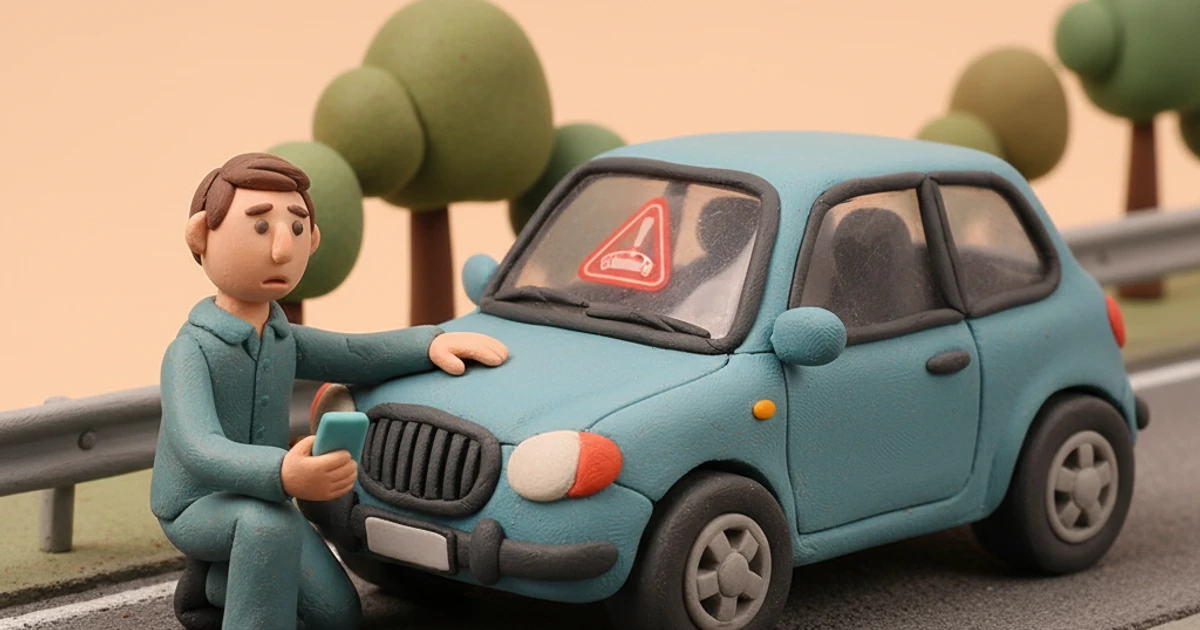
4. First Safety Steps When Your Low Tire Pressure Warning Appears
How to Respond Immediately While Driving
When your TPMS light comes on—whether it’s a direct sensor in each wheel or an indirect ABS‑based system—the first priority is keeping control of the vehicle. This is especially important on I‑480, I‑90, or snowy Route 8 in Northeast Ohio, where traffic and weather can change quickly.
Stay calm, keep a firm but relaxed grip on the wheel, and avoid sudden lane changes or sharp steering inputs. A tire that’s rapidly losing air can make the car feel “loose” or squirrely, and jerky corrections can trigger a skid, especially on wet or icy pavement.
Gradually ease off the accelerator and lower your speed to a range where you feel fully in control—often 45–55 mph on the highway if traffic allows. Do not slam on the brakes unless you’re avoiding an immediate hazard, because hard braking can overload a soft tire and increase the risk of a blowout.
Turn off cruise control so you can respond instantly if the car starts pulling to one side or you feel a rhythmic thumping. Many Cleveland drivers first notice vibration through the steering wheel on I‑71 or the Shoreway before the tire fully deflates.
When and How to Safely Pull Over
Once the TPMS light is on steadily, your next goal is to find a safe place to stop and inspect the tires. For both direct and indirect systems, treat the light as a warning that at least one tire may be 25% or more below the recommended pressure.
Scan ahead for a level, well-lit area such as a shopping center lot, service plaza, or wide shoulder. In downtown Cleveland or around Beachwood, a side street or gas station is usually safer than the edge of a busy multi-lane road.
If traffic is heavy or the shoulder is narrow, slow down and keep driving cautiously until you reach a safer spot, as long as the vehicle still feels stable and you don’t hear flapping or grinding. Stopping on a blind curve of I‑271 or the Innerbelt Bridge can be more dangerous than driving an extra half‑mile.
Once stopped, switch on your hazard lights and set the parking brake before you get out. This makes your vehicle more visible—crucial in lake-effect snow or heavy rain—and reduces the risk of the car rolling while you inspect the tires.
Visual Red Flags Not to Ignore
Before grabbing a gauge or compressor, do a slow walk-around. You are looking for clear signs that a tire is unsafe to drive on. This quick check is vital for EVs and loaded fleet vans, where weight can hide how serious the pressure loss is.
If a tire looks visibly squished at the bottom, the sidewall is bulging out, or the rim appears very close to the ground, that tire is dangerously low. On a Tesla Model 3 or a Ford Transit van, even a 10–15 psi loss can look dramatic when viewed straight from the side.
Look for obvious damage: cuts, bubbles in the sidewall, cords or steel belts showing, or objects like nails or screws lodged in the tread. In winter, it’s common for Northeast Ohio drivers to pick up construction debris on slushy roads around projects on I‑77 or I‑480.
If you see any of these red flags, do not keep driving on that tire. Continuing even a short distance can cause a blowout or ruin an expensive wheel, and on EVs it can also stress suspension components because of the added battery weight.
When to Call for Help Instead of Driving
Some situations call for professional help instead of trying to limp to a shop or DIY a fix. This is where services like Tires2You’s on-site assistance in Cleveland and nearby suburbs can prevent costly damage and unsafe roadside repairs.
If the tire is visibly flat, severely low, or damaged, call roadside assistance, your fleet’s maintenance line, or a mobile tire service. AAA and similar services regularly report that driving even a mile on a flat can shred the tire and bend the rim, turning a repairable $30–$40 puncture into a full replacement.
Driving on a near-flat tire can also confuse indirect TPMS systems that rely on wheel-speed sensors, delaying accurate warnings on the other tires. For fleet managers, that can mean taking multiple vehicles out of service instead of fixing one car promptly where it sits.
Mobile providers such as Tires2You can often repair or replace the tire right in your driveway, at your workplace, or at a fleet yard, which is especially helpful in January lake-effect storms or when your EV doesn’t have a spare tire. This keeps you out of traffic, minimizes downtime, and protects your wheels and suspension from avoidable damage.
FAQ: Low Tire Pressure Light First Steps
Does cold weather in Northeast Ohio really affect tire pressure?
Yes. For every 10°F drop in temperature, tires typically lose about 1–2 psi. A swing from 50°F to 20°F overnight around Lake Erie can easily trigger a TPMS light in the morning even if you were fine the evening before.
Should I react differently with direct vs. indirect TPMS?
The first safety steps are the same: stay calm, slow down, and inspect the tires. Direct systems use sensors inside each wheel and usually identify which tire is low. Indirect systems use ABS sensors and may be slower to warn you, so if the car feels off—even before the light—treat it as a possible low-pressure issue and check all four tires.
Reference: TPMS Light On? What it Means and What You Need to Do
5. How to Check Tire Pressure Correctly (Step-by-Step)
5. How to Check Tire Pressure Correctly (Step-by-Step)
Find the Correct Tire Pressure for Your Vehicle
Safe tire pressure starts with the numbers chosen by your vehicle’s engineers, not whatever is printed on the tire. For a Tesla Model 3 or a Ford F-150 used by a Cleveland delivery fleet, that recommended pressure is usually on a sticker inside the driver’s door jamb and in the owner’s manual.
That PSI is based on the vehicle’s weight, suspension, and expected load. It is always for “cold” tires—meaning the car has been parked for at least three hours or driven less than a couple of miles at low speed—so heat from driving doesn’t inflate the reading.
Do not use the maximum PSI molded on the tire sidewall as your target. That number is the tire’s upper limit, not the right setting for your car or EV. Running tires near that max can make the ride harsh, reduce grip on wet I‑90 pavement, and lead to uneven wear.
Choosing and Using a Tire Pressure Gauge
A reliable gauge makes tire checks fast and accurate. Most drivers do best with a digital gauge from brands like Accutire or AstroAI, which are easy to read in a dim garage and typically accurate within ±0.5 PSI. Stick (pencil) and dial gauges also work, but they’re a bit harder to read precisely.
Keep your gauge in a clean, dry spot such as the glovebox or a center console organizer. Fleet managers in Northeast Ohio often keep a labeled gauge in each van so drivers can check before morning routes. Every few months, compare two different gauges on the same tire; if one is consistently off by several PSI, replace it.
To take a reading, remove the valve cap and press the gauge straight onto the valve stem. A brief, light hiss of air is normal, but it should stop as soon as you seal. If you still hear hissing, adjust your angle and press more firmly until the sound disappears and you get a stable reading.
Step-by-Step Process to Check Each Tire
Cold weather in Northeast Ohio can drop tire pressure by about 1 PSI for every 10°F temperature change, which is why your dashboard light often appears on the first freezing morning. Always check pressure when tires are cold—ideally before a commute across the Shoreway or before a weekend trip to Columbus.
-
Park and let tires cool. Wait at least three hours after driving, or check first thing in the morning. This gives a true baseline reading and prevents heat from hiding underinflation.
-
Check all four tires. Compare each reading to the door-jamb PSI. Write numbers on your phone or a notepad so you don’t have to recheck. A RAV4 might read 33, 34, 31, and 33 PSI against a 35‑PSI spec, telling you the left-front needs the most air.
-
Check the spare (if equipped). Many compact spares require 60 PSI or more. Drivers often discover during a Turnpike breakdown that their spare is flat, which defeats its purpose.
-
Watch for one low tire. If one tire is 6–10 PSI lower than the rest, suspect a puncture, valve leak, or rim damage. In that case, add air to reach spec, then schedule a professional inspection so the problem doesn’t worsen at highway speeds.
How Often to Check Tire Pressure
Regular checks help prevent blowouts and improve efficiency. For most daily drivers in Cleveland, once a month is a good rule of thumb, plus any time you see the tire pressure warning light, notice sluggish handling, or before long highway drives.
EV owners—driving models like the Chevy Bolt EUV, Tesla Model Y, or Ford Mustang Mach‑E—should check every 2–4 weeks. Underinflation increases rolling resistance, cutting range and accelerating wear, especially with the instant torque of electric motors.
Fleet operators can reduce roadside emergencies and downtime by building tire checks into weekly or pre-trip inspections. For example, a courier fleet running 20 vans on Cleveland streets can prevent multiple roadside calls each winter simply by logging tire pressures every Monday morning.
When Your Tire Pressure Light Comes On (TPMS Guide)
The Tire Pressure Monitoring System (TPMS) warns you when pressure drops too low, often on the first cold snap off Lake Erie. Some vehicles use direct TPMS (sensors inside each wheel) while others use indirect TPMS (ABS-based, detecting changes in wheel speed).
-
Pull over safely and visually inspect. If the light is solid but the car feels normal, stop in a safe lot or side street and look for obvious flats, nails, or damage. If the light flashes and then stays on, it can mean a sensor issue rather than pressure alone.
-
Use a gauge—don’t rely only on the light. Direct TPMS often shows exact PSI per tire on the dash, but you should still confirm with a handheld gauge. Indirect systems may only show a generic warning, so a manual check at each valve stem is essential.
-
Add air to spec, then recheck. Use a station compressor or home inflator and set each tire to the door-jamb PSI. In winter, Cleveland drivers often see the light turn off after bringing tires from, say, 28 PSI back up to the recommended 35 PSI.
-
Reset TPMS if required. Indirect systems (common on some Honda and Volkswagen models) usually need a reset through a dash button or infotainment menu after setting pressures correctly. Direct systems often reset automatically after a short drive once pressures are in range.
-
Seek help when problems persist. If the light returns quickly or one tire keeps losing 3–5 PSI or more, schedule a professional check. For on-site support in the Cleveland area, a mobile service like Tires2You can test valves, inspect for punctures, and service TPMS sensors without taking vehicles off the road.
FAQ: Tire Pressure, TPMS, and Seasonal Changes
Why does my tire light come on only in cold weather?
As temperatures drop—common in Northeast Ohio fall and winter—air contracts and pressure falls. A 60°F October day turning into a 25°F November morning can easily pull a 35‑PSI tire down to 30–31 PSI, low enough to trigger TPMS alerts.
Is it safe to keep driving with the tire pressure warning on?
Short, low-speed driving to the nearest safe place to add air is usually acceptable, but extended driving on underinflated tires risks overheating, poor handling, and blowouts. On I‑271 or I‑480 at highway speeds, that risk increases significantly.
What if my TPMS light flashes, then stays solid?
A flashing TPMS light typically points to a sensor fault or communication issue. After it becomes solid, you may still have a pressure problem. Check pressures manually, then have a shop or mobile service diagnose the sensor, especially if your vehicle is over 5–7 years old, when many TPMS batteries start to fail.
Do I still need a gauge if my car shows PSI on the dash?
Yes. Dash readings are helpful, but a dedicated gauge verifies accuracy and helps confirm which tire is actually low. This is particularly useful for fleets or EV owners monitoring range, where a consistent 2–3 PSI error can meaningfully affect energy use.
Reference: Learn How to Check Tire Pressure | Free Air Checks
6. How to Fix Low Tire Pressure and Reset the TPMS Light
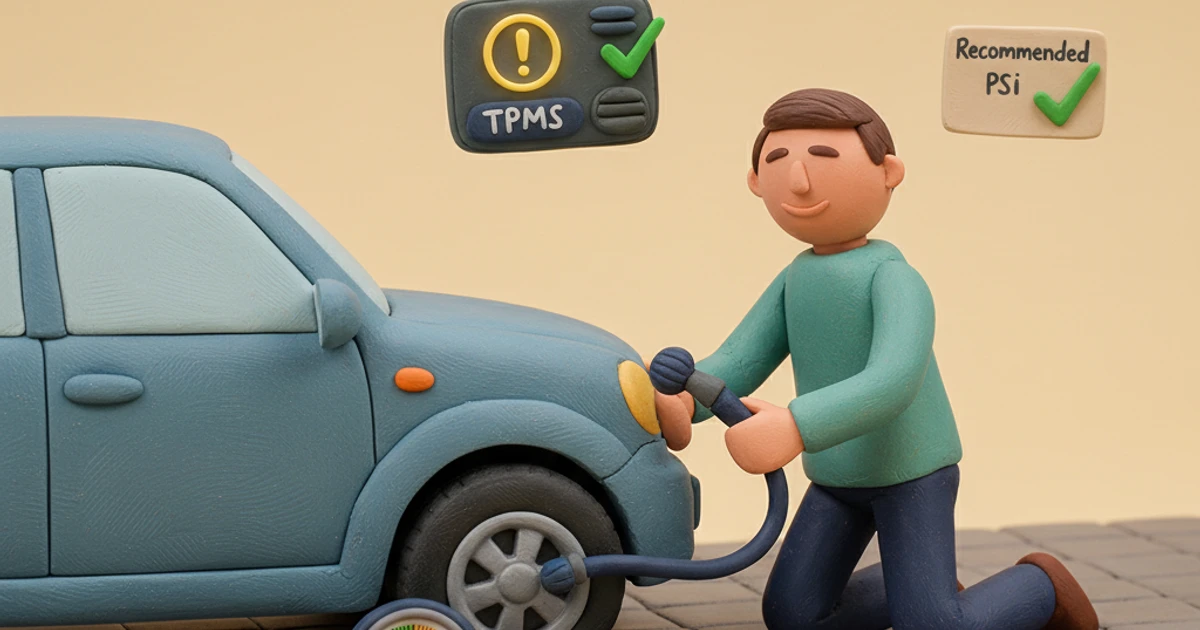
6. How to Fix Low Tire Pressure and Reset the TPMS Light
Safely Adding Air to Your Tires
When the TPMS light comes on, treat it like a low fuel warning: address it soon, not “someday.” In Northeast Ohio, a 10–20°F temperature drop can reduce tire pressure by 1–2 PSI, so it’s common to see the light after a cold night in Cleveland or Akron. Start by confirming which tire is low with a gauge, not just by looking.
You can inflate at home with a small air compressor, a portable 12V inflator that plugs into your EV or car, or public air stations at Speedway or Sheetz. Drivers with tight schedules or fleet vehicles can schedule a mobile visit from a service like Tires2You to handle inflation, inspection, and TPMS checks on-site without shop downtime.
Before inflating, park on level ground, set the parking brake, and turn on hazard lights if you’re near traffic. Position the vehicle so each valve stem is easy to reach, especially if you’re pulling up to a gas-station air pump. In winter, watch for ice around the air station where melted snow refreezes, a common issue near pumps along I-480 and I-90.
Wear gloves in cold weather to avoid numbing fingers while handling metal valve stems and couplers. In sub-freezing Cleveland conditions, this also helps you maintain a firm grip so you don’t drop the valve cap or slip while crouching. If conditions are unsafe or visibility is poor, consider calling a mobile tire service instead of trying to inflate tires in a busy or icy lot.
Inflating to the Recommended PSI
Tires are designed to be set to the “cold” PSI listed on the driver’s door placard, not the number on the tire sidewall. Cold means the vehicle has been parked for at least three hours and driven less than about a mile. This matters in Northeast Ohio because a car parked overnight in Lakewood at 20°F will read differently than one that just drove 20 miles on I-271.
If you must check pressure after driving, expect readings to be 2–4 PSI higher from heat. In that situation, avoid bleeding air to reach the exact cold-spec number; doing so could leave you underinflated once the tires cool. Instead, add air only if you are clearly below spec and recheck when the car has been sitting.
Inflate using small bursts: add air for 5–10 seconds, then check with a digital or dial gauge. This reduces the chance of overshooting the target, which can cause a harsh ride and uneven wear. For example, if your placard says 36 PSI and you measure 30 PSI, add in stages (32, then 34, then 36) rather than trying to jump straight to the final number.
After reaching the recommended PSI, replace valve caps securely to keep out moisture, salt, and grit kicked up by winter road treatments. Missing caps don’t usually cause immediate leaks, but they increase the risk of debris interfering with the valve core. Fleet managers should periodically inspect caps on all vehicles as part of routine maintenance checklists.
How and When the TPMS Light Turns Off
Once all four (or more, on dual-wheel setups) tires are set to the correct pressure, the TPMS light will usually clear on its own. Direct TPMS systems, which use a sensor in each wheel, may need a few minutes of driving at 20–50 mph for the system to see stable readings and verify that pressure is back in range.
Some indirect TPMS systems, which infer pressure from wheel-speed differences via the ABS, may take several miles to relearn, especially after large pressure corrections or seasonal swaps from summer to winter tires. It’s normal for the light to remain on during your first few blocks in Parma or Euclid even after you’ve inflated correctly.
If the light stays solid or flashes and then stays on after you have confirmed pressures with a reliable gauge, you may be looking at a TPMS fault rather than a pressure issue. Common causes include a dead sensor battery, corrosion from road salt on the valve stem, or a failed TPMS module. In that case, schedule a professional diagnosis so the system can be tested and repaired safely.
Manual TPMS Reset Procedures
Some vehicles, especially those with indirect TPMS (common on certain Honda, Volkswagen, and Toyota models), require a manual reset or calibration after setting pressures. This may be a physical button labeled “SET” or “TPMS” near the dash, or a menu option under vehicle settings on the infotainment screen.
Only perform a reset after every tire is confirmed at the correct PSI. If you reset when one tire is still low—say 30 PSI instead of the recommended 36—the system “learns” that incorrect value as normal, making it slower or unable to warn you of a real future loss. Fleet managers should train drivers not to hit the reset out of frustration when a light won’t go off.
For direct TPMS, some models don’t need any manual reset and will relearn automatically after a short drive. Others may require a specific sequence, like turning the ignition on, pressing a reset button, and driving at a certain speed, which varies by make and model. If the process isn’t clear, consult the owner’s manual or contact a professional mobile service such as Tires2You for on-site guidance and calibration support.
Step-by-Step Actions When the TPMS Light Comes On
When the TPMS light first appears, treat it as a safety alert. A tire that loses just 5–6 PSI can increase stopping distance and raise the risk of a blowout, especially at highway speeds on I-77 or I-480.
-
Find a safe place to stop. Pull into a well-lit lot or rest area rather than stopping on the shoulder in poor visibility. Set the parking brake before exiting the vehicle.
-
Visually inspect all tires. Look for obvious low or flat tires, sidewall bubbles, or embedded nails or screws. If a tire looks severely low or damaged, avoid driving and call roadside or mobile tire service.
-
Check pressure with a gauge. Compare each tire’s PSI to the door placard. For EVs and fleets, pay special attention to rear tires that often carry more weight from batteries or cargo.
-
Add air to cold-spec PSI. Inflate in small bursts, then recheck. In winter, assume overnight pressure can drop 1 PSI for every 10°F drop, so a mild overfill of 1–2 PSI is sometimes acceptable if you’re topping up in a warm garage.
-
Drive and monitor the light. After adjustment, drive for 5–15 minutes. If the light remains or returns, have the tire inspected for a slow leak or have the TPMS scanned for fault codes.
FAQ: Low Tire Pressure and TPMS
Why does my TPMS light come on only in the morning? Overnight temperature drops in Northeast Ohio can reduce pressure enough to trigger the light. As you drive and the tires warm, pressure rises and the light may go off, but you should still top up to spec.
Is it safe to drive with the TPMS light on? Short, low-speed trips to reach an air source are usually acceptable if the tire is not visibly flat. Highway driving or long distances with the light on can be dangerous, especially if a tire is more than 5–8 PSI low.
Do EVs need different tire pressures? Many EVs specify higher pressures to support battery weight and maintain range. Always follow the placard on the EV itself—do not assume traditional sedan or SUV pressures.
What if the TPMS light flashes then stays on? A flashing light that becomes solid often indicates a TPMS system fault, not just low air. In that case, have the system scanned by a shop or mobile service equipped with TPMS diagnostic tools so the specific sensor or module issue can be identified and repaired.
Reference: How to get this low pressure light off? I don’t have …
7. When the TPMS Light Stays On or Flashes: Troubleshooting and Next Steps
Steady vs. Flashing TPMS Light Revisited
When your TPMS light comes on in a Cleveland winter, you need to know whether it’s warning you about low pressure or a system malfunction. The way the light behaves—steady or flashing—gives you that first clue and guides your next move.
A steady TPMS light usually means at least one tire is below the recommended pressure. For direct TPMS (sensors in each wheel), follow these steps: (1) Park safely and let the tires cool 30 minutes; (2) Use a quality gauge to check all four tires plus the spare; (3) Inflate to the PSI listed on your driver’s door jamb, not the sidewall. For indirect TPMS (ABS-based), still check all tires manually, because the system is reading wheel speed, not actual pressure.
A flashing TPMS light typically points to a system fault—such as a dead sensor battery, communication loss, or a problem with the TPMS control module. Many vehicles, like late-model Honda and Ford SUVs, will flash for 30–60 seconds at startup, then stay solid to indicate a stored fault code that can be read with a scan tool. In that case, pressure might be fine, but the safety system itself needs professional attention.
Signs of Failing TPMS Sensors or Batteries
TPMS sensors don’t last forever. Most factory sensors use sealed, non-replaceable lithium batteries that typically last 7–10 years in Northeast Ohio’s mixed climate. As those batteries weaken, the system starts sending you subtle early warnings before it fails completely.
Common symptoms include intermittent TPMS lights that come and go, wildly incorrect readings on a digital dash (for example, one tire showing 12 psi while a handheld gauge shows 36 psi), or no reading at all from one wheel location. Fleet managers in Cleveland often notice the same truck repeatedly showing a TPMS error on the same wheel position—an early sign that sensor is nearing the end of its life.
Professional diagnostic tools can pull TPMS-specific error codes and even ping each sensor individually to see which one isn’t responding. Shops and mobile services use tools from brands like Bartec or Autel to identify failing sensors, confirm battery death, and verify signal strength. Once the battery dies, the only real fix is replacing the entire sensor and then relearning its position to the vehicle.
Why Ignoring or Overriding the TPMS Light Is Risky
It might be tempting to ignore the light, put tape over it, or use a scan tool to shut it off, especially if it comes on every time the temperature drops. But treating the TPMS light as background noise makes it easy to miss a truly dangerous low-pressure situation on an EV or work van loaded with tools.
Underinflated tires can run 20–25% hotter at highway speeds, increasing the risk of blowouts, longer stopping distances, and poor handling. The National Highway Traffic Safety Administration (NHTSA) has repeatedly linked underinflated tires to crashes and loss-of-control incidents. Disabling TPMS removes that safety net, which is especially risky on I-480 or I-90 in heavy rain or lake-effect snow.
TPMS is also a regulated safety feature on vehicles sold in the U.S. since the mid-2000s. Many Ohio inspection programs and commercial fleet policies require the system to function properly. A non-working TPMS can complicate warranty claims, lease returns, or fleet safety audits, and it puts drivers at greater risk when road conditions are already challenging.
When to Schedule Professional TPMS Service
There are clear signs it’s time to call in a professional instead of clearing the light and hoping for the best. This is especially true for EV owners and fleet managers who can’t afford unexpected downtime or tire-related roadside calls.
You should schedule TPMS service when: (1) The light stays on even though you have verified all pressures are correct with a reliable gauge; (2) The light keeps flashing at startup after you’ve tried a reset procedure from the owner’s manual; (3) You see inconsistent or missing readings on the dash from one or more wheels. These patterns usually indicate a sensor, module, or software issue—not just low air.
Qualified technicians can identify defective sensors, relearn sensor positions after a seasonal tire swap, update TPMS software on newer EVs, and replace or reprogram components as needed. In the Cleveland area, mobile services like Tires2You come to your driveway, workplace, or fleet yard, performing sensor replacement, relearns, and tire inspections on-site so you avoid shop visits and keep EVs and fleet vehicles in service.
Practical Steps When Your TPMS Light Comes On
When the TPMS light first appears, a simple, calm process helps you separate a harmless winter pressure drop from a real emergency. These steps work for both direct and indirect TPMS systems and are especially important during Northeast Ohio’s sharp overnight temperature swings.
-
Pull over and inspect visually
Look for a visibly low tire, sidewall damage, or something stuck in the tread. If a tire looks severely low or flat, avoid highway speeds and call for roadside or mobile service. -
Use a gauge on cold tires
After the car has been parked 30 minutes, check each tire with a handheld gauge. Direct TPMS can be off a few psi; the manual reading is your reference. For indirect TPMS, this is the only way to know actual pressure. -
Adjust to door-jamb PSI
Inflate or deflate to the number on the driver’s door placard. In a Cleveland cold snap, expect pressure to drop about 1 psi for every 10°F drop in temperature, so a 40°F swing can easily trigger the light. -
Perform a system reset if required
On indirect TPMS (common on some Volkswagen and Toyota models), you often must press a reset button or use a menu option after setting correct pressures so the system can relearn baseline values. -
Monitor for the next 24–48 hours
If the same tire keeps losing pressure, you likely have a slow leak from a nail, valve stem, or bead seating issue, and you should schedule a repair or mobile visit.
FAQ: Common TPMS and Tire Pressure Questions
Does cold weather in Northeast Ohio really affect my TPMS light?
Yes. When temperatures drop quickly from, say, 60°F to 20°F overnight, you can lose 3–4 psi without any actual leak. That’s enough to trigger the TPMS on many sedans, SUVs, and EVs. A quick top-off to the recommended PSI often resolves the light in these cases.
Is it safe to drive if the TPMS light just came on?
If the light is steady and the car feels normal, you can usually drive a short distance to a safe spot to check pressures. However, if steering feels heavy, the vehicle pulls to one side, or a tire looks visibly low, treat it as urgent and avoid highway speeds until the tire is inspected and properly inflated or repaired.
Can a mobile service handle TPMS issues, or do I need a shop?
Modern mobile services serving the Cleveland area often carry TPMS programming tools and replacement sensors in their vans. They can test sensors, replace failing ones, and perform relearns in your driveway or at a fleet yard, which is especially convenient for EVs and multi-vehicle operations trying to minimize downtime.
Reference: TPMS LIGHT BLINKING AND STAYS ON FIX
8. Seasonal Tire Pressure Changes in Northeast Ohio: Preventing Winter TPMS Warnings
How Cold Temperatures Affect Tire Pressure
Northeast Ohio winters can swing from 45°F rain in the afternoon to 20°F and snow by dawn. Those temperature drops pull air pressure out of your tires, which is why many Cleveland drivers see the TPMS light pop on after the first real cold snap in November.
Air contracts as it gets colder, so the same volume of air now takes up less space inside the tire. For every 10°F drop in temperature, tire pressure typically falls about 1 PSI. A tire at 35 PSI on a 60°F October day can sag to 30–31 PSI when a Lake Erie cold front drives temps into the low 20s overnight.
This effect is magnified by the region’s rapid temperature swings. One day on I‑480 or I‑90 might be mild, the next morning you’re scraping frost, and the TPMS light is glowing. Even a perfectly sealed tire can lose 3–5 PSI during a sharp cold snap, which is often enough to fall below the TPMS warning threshold if pressures were already a bit low.
Drivers who set pressure during a warm afternoon at a gas station in Parma or Euclid often wake up to a surprise light in the morning. The tires weren’t punctured; they were just never at the correct cold inflation level to begin with, so the system correctly flags them as underinflated when the temperature drops.
Fall and Winter Tire Pressure Strategies for Ohio Drivers
As fall arrives around Cleveland, Akron, and Lorain, it pays to treat tire pressure like you treat your furnace: checked before the real cold hits. Consistent attention in October and November reduces nuisance warnings and helps you stop safely on snowy routes like I‑271 and Route 8.
First, check and adjust your tire pressure every 2–3 weeks during seasonal transitions. Use a trusted digital gauge, not just the gas station stick. Aim for the automaker’s recommended cold PSI printed on the driver’s door placard, not the number on the tire sidewall, which is a maximum rating.
Second, measure pressure in the early morning before driving, when tires are truly “cold.” If you set pressure to 35 PSI on a chilly 30°F morning, it may rise a couple of PSI as you drive, but it will stay within the safe range all day. Setting pressure after a long highway run on the Ohio Turnpike can leave you underinflated the next morning when everything cools back down.
Third, schedule a tire inspection and rotation before the first major snowstorm. Many Northeast Ohio drivers book service after the first big lake-effect blast, which leads to crowded shops and delays. Mobile providers like Tires2You come to your driveway or fleet yard to check pressure, rotate tires, and verify tread depth before the bad weather hits.
Special Considerations for EVs and Fleets in Freezing Conditions
Electric vehicles and commercial fleets feel winter tire issues more sharply than most everyday commuters. Batteries, cargo, and constant stop‑and‑go driving add weight and stress, making proper pressure a critical safety and cost factor.
EVs such as the Tesla Model 3, Ford F‑150 Lightning, and Chevy Bolt typically weigh several hundred to over a thousand pounds more than their gasoline counterparts. That extra mass presses down on each tire. Underinflation increases rolling resistance, which already rises in cold weather, causing noticeable range loss on winter drives from Cleveland to Youngstown.
Fleets—like delivery vans running downtown Cleveland or service trucks on Route 2—face a different challenge. When tires are underinflated, the sidewalls flex more with each stop and start. This extra flexing generates heat, even on 25°F days, which can lead to internal damage and, in severe cases, blowouts, especially under heavy loads.
For both EVs and fleets, closer pressure monitoring in winter is essential. Many operators schedule weekly or bi‑weekly checks, often using mobile services such as Tires2You to scan each vehicle, adjust PSI, and log data. This approach protects range, keeps braking distances predictable on slick roads, and reduces unscheduled downtime from avoidable tire failures.
Reducing TPMS Alerts with Regular Seasonal Maintenance
Consistent, seasonal tire care does more than keep your dashboard free of warning icons. It stabilizes how your vehicle handles when you hit slush on I‑71 or packed snow in Lakewood neighborhoods. Thoughtful maintenance also cuts the risk of last‑minute roadside emergencies during January cold snaps.
Regular pressure checks combined with seasonal tire swaps—such as installing dedicated winter tires in November and removing them in March—help keep pressures balanced and TPMS alerts rare. When tires are matched to conditions, they warm up more evenly, maintain grip, and trigger fewer system warnings.
Mobile services like Tires2You can visit home driveways, apartment lots, or fleet yards in places like Mentor, Strongsville, or Twinsburg. Technicians can adjust pressures, rotate tires, inspect TPMS components, and install winter sets without pulling vehicles off the road or out of service.
This proactive approach significantly lowers the chance of on‑road incidents and emergency calls during harsh winter conditions. By handling inspections before storms, you avoid scrambling when the TPMS light flashes as you merge onto I‑480 in a whiteout and every nearby tire shop is already backed up.
What To Do When Your Tire Pressure Light Comes On
When the TPMS light illuminates on a cold Northeast Ohio morning, treat it as a safety alert, not a minor annoyance. Whether your vehicle uses direct TPMS (sensors in each wheel) or indirect TPMS (using ABS wheel speed data), the steps you take in the next few minutes matter.
-
Pull over safely and visually inspect all tires. Look for a clearly flat tire, sidewall bulges, or nails and screws. On direct TPMS systems, some vehicles, like many Hondas and Subarus, display which tire is low. If a tire looks severely low, install the spare if you can do so safely or call for assistance.
-
Check pressure with a gauge, even if the tires look “okay.” Use a digital gauge to compare each tire to the door‑placard PSI. Indirect TPMS systems, common on some Volkswagen and Toyota models, may trigger the light based on rolling diameter differences, so a tire can be low without looking obviously deflated.
-
Inflate to the recommended cold PSI, not just until the light turns off. Stop at a reliable air pump in places like Sheetz or GetGo, then set all tires—including the spare, if it has a sensor—to placard pressure. In winter, aim for the exact recommended number; do not “under‑inflate for snow,” which increases stopping distance and tire wear.
-
Drive and see if the light resets, then consider TPMS calibration. On many direct TPMS systems, the light will go off after a short drive once pressures are corrected. Indirect TPMS setups often require a manual recalibration through the dashboard menu after you set pressures. If the light returns quickly, there may be a leak or sensor fault, and you should schedule a professional inspection.
Common mistakes include ignoring a flashing TPMS light (which often indicates a sensor issue), overfilling tires above the placard PSI, or relying solely on gas‑station gauges that may be inaccurate. If you’re unsure, mobile technicians from services like Tires2You can test sensors, verify actual PSI with calibrated tools, and advise whether the warning is temperature‑related or a true mechanical problem.
FAQ: Winter TPMS and Tire Pressure in Northeast Ohio
Why does my TPMS light only come on in the morning and then go off?
This usually happens because overnight temperatures drop sharply, reducing pressure just enough to cross the TPMS threshold. As you drive, the tires warm up, pressure rises slightly, and the light goes out. It’s a sign your baseline pressure is marginal and should be adjusted at cold morning temperatures.
Is it safe to keep driving if the TPMS light turns on during a cold snap?
You can typically drive a short distance to a safe location or air pump, but you should slow down and avoid highway speeds until you’ve checked pressure. A TPMS warning means at least one tire is significantly below its recommended level, which lengthens stopping distance and can lead to overheating, even in winter.
Do EVs need different tire pressures in winter than gas vehicles?
The correct pressure for an EV is still what’s listed on its door placard, but maintaining that number is more critical due to the vehicle’s weight and sensitivity to rolling resistance. Underinflated tires on an EV not only reduce safety but can cut winter range noticeably on common drives like Cleveland to Akron or Cleveland to Sandusky.
When should I call a professional for TPMS issues?
Contact a tire professional or a mobile service like Tires2You if the light flashes and stays on, if it returns soon after you inflate the tires, or if you notice uneven wear, vibration, or visible damage. Persistent warnings often point to slow leaks, sensor battery failures, or internal tire damage that shouldn’t be ignored in winter conditions.
Reference: Why Ignoring a Tire Pressure Light in Winter Can Destroy …
9. Tire Pressure, EVs, and Fleets: Extra Reasons Not to Ignore the TPMS Light
How Low Tire Pressure Impacts EVs
Electric vehicles are especially sensitive to tire pressure because every bit of rolling resistance shows up directly in your remaining range. When a tire is underinflated, more rubber contacts the road, the sidewalls flex more, and the car must use extra battery energy to keep moving.
For many EVs, a drop of just 5–6 psi can cut real‑world range by 5–10%. A Cleveland commuter driving a Tesla Model 3 or Chevy Bolt on I‑90 may notice fewer miles per charge on cold mornings when pressures fall with the temperature, which is common in Northeast Ohio winters.
EVs also deliver instant torque and usually weigh hundreds of pounds more than similar gas vehicles. That extra weight and torque can scrub off tread quickly when pressures are low, especially on the driven axle.
Consistent, correct pressure helps maintain grip during hard launches and regen braking, and it keeps those expensive EV‑specific tires wearing evenly. That protects your investment and reduces how often you need full tire replacements.
Effects of Underinflation on Fleets
For fleet operators, tire pressure is a budget line item, not just a dashboard light. Underinflated tires wear out faster, burn more fuel or battery energy, and are far more likely to suffer sidewall damage or blowouts that lead to roadside calls.
Studies from organizations like the U.S. Department of Energy have shown that properly inflated tires can improve fuel economy by up to 3%. Across a 40‑vehicle plumbing or delivery fleet in Cleveland, that can mean thousands of dollars a year in avoided fuel or charging costs.
Every flat or blowout risks a missed delivery window, delayed service call, or safety incident. A single tow plus emergency tire replacement can easily top $400, not counting overtime and lost customer goodwill.
Fleets that track pressure and respond quickly to TPMS alerts tend to see longer tread life and fewer unplanned breakdowns. Over a multi‑year period, that reliability translates into lower operating costs and more vehicles on the road instead of in the shop.
Why Consistent Pressure Matters for Heavy Loads and Stop-and-Go Driving
Vehicles that haul tools, parts, or passengers place extra stress on their tires even when they rarely leave city streets. When those tires are underinflated, the load concentrates on the shoulders and sidewalls, increasing heat and fatigue in the tire structure.
A work van running full of HVAC equipment around Cleveland neighborhoods in stop‑and‑go traffic is a perfect example. Constant braking and accelerating heat the tires, and if pressure is low, that heat builds faster and can weaken the internal components.
Busy rideshare drivers, contractors, and small business owners should check pressures more frequently than casual drivers. That habit helps maintain safe handling margins during sudden stops, tight turns, or emergency maneuvers in crowded urban traffic.
It’s especially important in winter, when a 10–20°F overnight temperature drop can reduce pressure by 1–2 psi per tire, just from the cold alone. Without regular checks, a fully loaded vehicle can drift well below safe pressure in a single week of lake‑effect weather.
How On-Site, Subscription-Based Tire Maintenance Helps
EV owners and fleet managers often know tire pressure matters but struggle to find time for regular checks and rotations. On‑site, subscription‑based programs solve that problem by bringing tire care directly to your driveway, lot, or depot.
Tires2You, serving the Cleveland area, can schedule recurring visits to inspect tread, verify and adjust pressures, rotate tires, and review TPMS warnings before they turn into emergencies. That approach keeps EVs and fleet vehicles road‑ready without sacrificing work hours for shop visits.
When professionals monitor both TPMS data and the physical condition of each tire, surprise dashboard lights and side‑of‑the‑road repairs become less frequent. Fleet managers gain consistent records for safety audits, and individual drivers get the reassurance that someone is proactively watching their tires.
On‑site service also makes it easier to stay on schedule for seasonal checks, especially before harsh Northeast Ohio winters, when pressure drops and potholes are at their worst. Drivers and managers stay focused on their primary work while Tires2You handles the details that keep tires safe.
What To Do When Your TPMS Light Comes On
When the tire pressure light appears, treat it as an early warning, not an optional reminder. In cold Cleveland mornings, the light may come on briefly because pressure dropped overnight, then turn off as the tires warm, but you should still verify actual pressure.
Start by finding a safe place to pull over and do a quick visual check. Look for obviously low or damaged tires. If any tire looks severely low, avoid highway speeds and drive slowly to the nearest safe location or call for mobile service.
Step-by-Step Actions for Direct TPMS (Sensor in Each Wheel)
-
Confirm which tire is low using the dashboard display, if your vehicle shows individual pressures. Many modern EVs and trucks display PSI per wheel in the settings or vehicle status menu.
Use a quality tire gauge to manually check all four (or more) tires, including the spare if accessible. Fill each tire to the recommended pressure on the driver’s door sticker, not the number on the tire sidewall.
-
Drive for 5–10 minutes and watch the TPMS light. If it goes off and stays off, the system recognized the corrected pressure.
If the light remains on, there may be a slow leak, a faulty sensor, or damage from a pothole—especially common after winter in Northeast Ohio. Schedule a professional inspection as soon as possible.
Step-by-Step Actions for Indirect TPMS (Wheel Speed-Based)
-
Understand that indirect systems don’t read actual PSI. Instead, they infer low pressure from changes in wheel speed and rotation, so they can be triggered by tire changes or uneven wear.
When the light appears, manually check and adjust pressure on all tires with a gauge. Relying only on the dashboard is a common mistake with indirect TPMS.
-
After correcting pressures, use the vehicle’s TPMS reset or calibration function, usually found in the settings menu or owner’s manual steps.
Drive for the specified calibration distance (often several miles). If the light comes back soon after, have a technician inspect for punctures or alignment issues that may be throwing off the system.
Seasonal Pressure Tips for Northeast Ohio
Local drivers should expect tire pressure to drop as temperatures fall in late fall and winter. Roughly, for every 10°F decrease, pressure can drop about 1 psi, which adds up quickly during a cold snap off Lake Erie.
Before the first freeze, check pressures and set them to the door‑sticker recommendation using a reliable gauge. Through winter, recheck at least once a month or whenever a deep cold front moves in.
FAQ: Common TPMS and Tire Pressure Questions
Q: Can I keep driving if the TPMS light is on but the car feels normal?
In many cases, the car will feel fine even with low pressure, but internal tire temperatures and wear can still be unsafe. Treat any TPMS light as a reason to stop soon and verify PSI.
Q: Why does my TPMS light turn on only in the morning?
Cool overnight temperatures lower pressure, and Northeast Ohio’s swings can be dramatic. As you drive and the tires heat up, pressure rises and may switch the light off, but you’re still likely running below the ideal starting pressure.
Q: My direct TPMS shows different pressures at each wheel. Is that normal?
Small differences (1–2 psi) can occur, but larger gaps suggest a slow leak, valve issue, or bead leak from a pothole hit. Have those tires inspected, especially before long highway trips.
Q: When should I call for professional help instead of handling it myself?
Seek help if a tire looks visibly flat, you hear air hissing, the light flashes and stays on (often a sensor fault), or you’re unsure about a reading. Mobile services like Tires2You can come to your home, workplace, or fleet yard to diagnose and fix the problem on-site.
Reference: The Little Warning Light That May Save Your Life
10. When to DIY and When to Call Tires2You for On-Site Help
Situations You Can Safely Handle Yourself
When your tire pressure light (TPMS) comes on, the first step is to stay calm and gather a bit of information. Both direct TPMS (sensors in each wheel) and indirect TPMS (using ABS wheel-speed data) are designed to warn you before a tire becomes dangerously low.
In Northeast Ohio, sharp temperature drops of 10–20°F overnight can lower tire pressure by 1–2 PSI, often triggering the light without any real damage. If handling feels normal and you don’t see visible damage, it is usually safe to handle the first check yourself.
Safe DIY Pressure Checks and Top-Offs
If the TPMS light is steady (not flashing), the car drives normally, and all tires look evenly inflated, most drivers can safely add air on their own. Start by using a reliable gauge, not just the gas station stick gauge, to compare actual PSI to the label on your driver’s door jamb.
For a direct TPMS system, confirm each tire’s number on the dash matches your manual reading. With indirect systems, you’ll just compare your gauge to the recommended PSI, then inflate each tire to specification and reset the TPMS through your vehicle menu as the owner’s manual describes.
Good Monthly DIY Habits
Routine checks are one of the best safety habits you can build. The National Highway Traffic Safety Administration (NHTSA) notes that about 1 in 4 cars on U.S. roads has at least one significantly underinflated tire, which can increase crash risk and reduce fuel economy by up to 3%.
Take 5–10 minutes once a month to check pressures at home or at a station before work. Before a Cleveland–to–Columbus road trip, for example, verify each tire is within 1 PSI of the recommended number to help avoid TPMS alerts on the highway.
When Portable Tools Are Enough
Drivers who keep a small 12V inflator and digital gauge in the trunk are well positioned to handle mild pressure drops. Many EV owners in Cleveland use compact inflators similar to those sold at major retailers, which can add 5–10 PSI in just a few minutes per tire.
If a Tesla Model 3 driver, for instance, sees the TPMS light on a cold January morning and finds all four tires at 3 PSI below spec, a quick top-off at home is typically all that’s needed—no shop visit required unless the light returns quickly.
Warning Signs That Require Professional Help
Some TPMS alerts indicate more than just a routine top-off. Paying attention to patterns and visual cues helps you decide when to bring in Tires2You for on-site inspection and repair instead of repeatedly refilling the same tire.
These warning signs matter even more in winter, when potholes and road salt around Cleveland, Lakewood, and Parma can accelerate tire damage and corrosion around wheels and valves.
Repeated Alerts and Slow Leaks
If your TPMS light comes back within a day or two after inflation, you may have a slow leak, bead leak, or valve issue. For example, a delivery van that needs air in the same rear tire every Monday likely has a puncture from a screw or nail that only a proper internal patch can fix.
Direct TPMS vehicles may even display that one tire is consistently 4–6 PSI lower than the others. That pattern is a clear sign to schedule a Tires2You visit instead of topping it off week after week.
Visible Damage or Abnormal Wear
Any visible sidewall bulge, deep cut, or exposed cords is a do-not-drive signal. If you see a bubble on the sidewall after hitting a Cleveland pothole on I-77, the internal structure of the tire may be compromised and at risk of a blowout.
Uneven wear patterns—such as cupping, feathering, or heavy edge wear—also indicate suspension or alignment issues that can shorten tire life. A Tires2You technician can document these patterns on-site and recommend whether rotation, alignment, or replacement is the safest course.
Flashing Lights and Sensor Problems
A flashing TPMS light, especially in direct systems, usually signals a sensor or system fault rather than low pressure alone. Common causes include dead sensor batteries (often around 7–10 years old) or damaged sensors from past tire work.
If readings jump around, disappear, or multiple errors show up on the dash, specialized diagnostic tools are needed. This is the right time to have a Tires2You tech bring scan tools and TPMS programming equipment directly to your driveway or fleet lot.
How Mobile Tire and TPMS Service Works
Mobile tire service brings the equipment of a traditional tire bay directly to your location. For EV owners and fleet managers in Cleveland, this means tire care can fit your schedule instead of forcing vehicles out of service.
Tires2You vans are stocked with jacks, torque wrenches, compressors, TPMS tools, and patching equipment, allowing full service in apartment garages, office lots, or fleet yards.
On-Site Repairs, Replacements, and TPMS Work
During a typical visit, technicians can safely lift the vehicle, remove wheels, and repair punctures from the inside with industry-approved patch-plug methods. If a tire is not safely repairable, they can replace it and ensure all wheels are torqued to manufacturer specs.
For direct TPMS, Tires2You technicians can install new sensors, program them to your vehicle, and verify that each wheel’s reading matches a handheld gauge. They then set all pressures to the correct PSI and confirm the warning light is cleared before leaving.
Why This Helps EV Owners and Fleets
EV owners often worry about range loss from detours to tire shops or idling in long service lines. Mobile service lets a Nissan Leaf or Chevy Bolt owner in Shaker Heights get a rotation or patch while working from home, keeping the battery free for real driving.
Fleet operators—such as local parcel services or medical transport providers—benefit from avoiding unplanned downtime. Instead of taking three vans off the road for half a day, a Tires2You crew can service the whole lineup in the yard between routes.
Benefits of Scheduled On-Site Tire Maintenance
Preventive tire care is usually cheaper and safer than emergency fixes. Regular, scheduled visits from Tires2You keep pressures in range, tread wear even, and TPMS systems healthy before warning lights start blinking.
This approach is especially effective for Northeast Ohio’s seasonal swings, where temperatures can range from single digits in January to the 80s in August, constantly shifting tire pressures.
Fewer Surprises and Seasonal Swaps
Scheduled checks for pressure, tread depth, and rotation help reduce surprise TPMS alerts and extend tire life. In winter, Tires2You can adjust pressures after the first major cold snap, when many drivers see their lights come on all at once.
Seasonal swaps—such as changing from all-weather to winter-focused sets—can be done at your driveway, with off-season tire storage included in some plans. That means no hauling dirty tires in your trunk or waiting in line at a shop after the first snow.
Time Savings, Safety, and Early Problem Detection
On-site service helps you reclaim hours you would otherwise spend waiting at a traditional store. A Cleveland-area realtor, for example, can have Tires2You rotate and inspect her EV while she’s on a client call at home, instead of losing an afternoon in a lobby.
Regular visits also catch early issues—like light inner-edge wear on a front tire or a slow valve leak—before they become blowouts or require premature tire replacement. For fleets, this consistent oversight supports uniform safety standards across every vehicle.
Step-by-Step: What to Do When Your Tire Pressure Light Comes On
Knowing what to do in the first 10 minutes after seeing the TPMS light can prevent damage and keep you safe. The basic approach is similar for both direct and indirect TPMS, with a few key differences in how you confirm and reset the system.
Use these steps any time the light appears, especially during abrupt weather changes around Cleveland.
-
Reduce speed and find a safe place to stop. Avoid sudden braking or swerving, especially on I-480 or I-90. Pull into a parking lot or wide shoulder and visually inspect all four tires for obvious flats, bulges, or damage.
-
Check pressure with a quality gauge. For direct TPMS, compare the dash reading to your handheld gauge. For indirect systems, rely fully on your gauge and the door-jamb sticker since the dash won’t show individual PSI numbers.
-
Inflate to the recommended PSI. Use a home compressor, portable inflator, or a gas station air pump. Inflate each tire to the exact PSI listed on the door sticker, not the maximum on the tire sidewall.
-
Reset the TPMS correctly. Many direct systems reset automatically after a short drive once pressures are correct. Indirect systems usually require you to use the infotainment or dash menu to start a “TPMS reset” or “tire calibration” so the system relearns the new normal.
-
Monitor over the next 24–48 hours. If the light returns quickly or one tire keeps losing more than 2 PSI per day, schedule an on-site visit with Tires2You. Persistent loss indicates a leak or damage that simple topping-off cannot solve.
FAQ: Common Questions About TPMS and When to Call Tires2You
Why does my TPMS light come on only in cold weather?
Air contracts when temperatures drop, so a 20°F overnight swing in Cleveland can lower pressure by about 2 PSI. If your tires were already a bit low, that small drop is enough to trigger the light, especially in the first real cold snap of the year.
Can I keep driving with the TPMS light on if the car feels normal?
You can usually drive a short distance to a safe location, but you should not ignore the warning for long. Even a tire that feels “fine” at the wheel may be several PSI low, which increases stopping distance, reduces EV range, and raises the risk of heat buildup.
Do I need a professional every time the light comes on?
No. Many alerts from small temperature-related drops can be handled with a gauge and inflator at home. However, if the light keeps returning, if the TPMS icon flashes, or if you see visible damage, it is time to have Tires2You inspect and service your tires on-site.
Reference: DIY vs. Professional Tire Repair: When to Fix it Yourself and …
Conclusion: Key Takeaways to Keep Your TPMS Light Off and Your Tires Safe
Why the Tire Pressure Light Matters
Your tire pressure light is not a suggestion; it is a safety alert. When it comes on, your TPMS is warning that at least one tire may be underinflated, which can lengthen stopping distances, hurt cornering, and reduce stability during emergency maneuvers.
The National Highway Traffic Safety Administration has reported that driving on underinflated tires can increase crash risk and shorten tire life dramatically. For a family driving a Tesla Model Y or a Chevy Equinox around Cleveland, that warning light can be the difference between a controlled stop and a skid in wet conditions.
Responding quickly to the light also protects your wallet. Properly inflated tires can improve fuel economy or EV range by up to 3–5%, which adds up on daily I-480 or I-90 commutes. Addressing issues early reduces the odds of a highway blowout and an expensive roadside tow.
In Northeast Ohio, where winter mornings can start at 15°F and afternoons jump into the 40s, pressure can drop 1 psi for every 10°F fall in temperature. Those overnight swings around Lake Erie make it especially important to take sudden TPMS alerts seriously, even if the tires looked fine the day before.
Best Habits to Prevent Low Tire Pressure Warnings
Building a routine is the simplest way to keep your TPMS light off. Treat tire checks like checking your phone battery: once a month, and before any long drive to places like Columbus or Pittsburgh.
First, check pressure monthly and before major temperature changes. Use a quality digital gauge and compare readings to the sticker on your driver’s door jamb, not the number on the tire sidewall. That door placard lists the cold pressure your specific vehicle was engineered to use.
Second, learn how your TPMS works. Direct systems use sensors inside each wheel to read actual psi, common on EVs like the Ford F-150 Lightning. Indirect systems use ABS wheel-speed sensors to infer a low tire. Knowing which you have helps you understand why the light may take time to reset after adding air.
Third, inspect your tires visually. Look for nails, sidewall bubbles, or uneven wear, and follow your maintenance schedule for rotations and seasonal swaps. In Cleveland, many drivers run dedicated winter sets; pairing these with regular inspections through a mobile provider like Tires2You helps catch slow leaks before they trigger a warning on a snowy morning.
How Proactive Tire Care Saves Money and Improves Performance
Keeping your tires at the right pressure is one of the lowest-cost ways to save money on every mile you drive. For gasoline vehicles, the U.S. Department of Energy estimates that proper tire pressure can improve fuel economy by about 0.6% on average and up to 3% in some cases.
For EVs, that translates directly into range. A Nissan LEAF or Rivian R1T running 5–7 psi low can lose several miles of range per charge, which matters when winter weather already reduces battery performance. Over a year, that means more charging stops and higher energy costs.
Comfort and control improve as well. Correctly maintained tires track straighter on wet routes like I-71, ride more quietly on older pavement, and respond more predictably if you need to brake hard for sudden lake-effect snow. That consistent handling is especially important for heavier EVs, which place more load on tires.
For fleets—delivery vans, rideshare vehicles, or corporate EV pools—proactive tire care improves uptime and schedule reliability. Fewer roadside flats mean more on-time deliveries, fewer missed appointments, and better customer satisfaction. Many regional fleets around Cleveland now schedule regular mobile tire checks to avoid pulling vehicles off the road during business hours.
Next Steps for Northeast Ohio Drivers, EV Owners, and Fleets
When your tire pressure light comes on, a simple step-by-step approach keeps you safe and avoids damage. This applies whether you drive a personal sedan or manage a 20-vehicle EV fleet.
-
Pull over safely and inspect visually. Look for a tire that appears flatter than the others, obvious punctures, or damage. If you see a bulge, cut, or hear hissing, avoid driving at highway speeds and consider calling for mobile assistance.
-
Check pressures with a gauge. For direct TPMS, compare each tire’s psi to the door placard. For indirect TPMS, do the same, because the system is only comparing relative wheel speeds and will not show the exact pressure.
-
Add air to the recommended level. Many Northeast Ohio drivers use free air stations at Sheetz or Speedway, but a portable compressor in your garage or trunk is more reliable during winter. Inflate when the tires are cold for the most accurate reading.
-
Reset or recalibrate the system if required. Direct TPMS often clears the light automatically after driving a few miles. Indirect systems may need a manual reset through the dashboard menu; this tells the car to relearn the new normal wheel speeds.
-
Schedule professional help if the light returns. If the warning comes back within a day or two, you may have a slow leak, valve stem issue, or faulty sensor. That is the time to book a professional inspection or on-site mobile visit rather than topping off air repeatedly.
Seasonal temperature swings in Northeast Ohio deserve extra attention. Before the first major cold front in November and again in early spring, check and adjust pressures, especially on EVs and work vans that carry heavy loads. For recurring TPMS alerts or uneven wear, scheduling routine mobile service with a provider like Tires2You helps keep both personal vehicles and fleets safely on the road without losing time in a waiting room.
FAQ: Tire Pressure Lights, TPMS, and Seasonal Changes
Drivers across Cleveland and the surrounding suburbs often ask the same questions when that amber tire icon appears. Clear answers can make the difference between a quick fix and an avoidable breakdown.
Why did my tire light come on when it got cold overnight?
Air contracts as temperatures drop, so a 30°F overnight change can easily reduce pressure by 3 psi or more. That is often enough to trip the TPMS threshold, especially in January along the Lake Erie shoreline. Usually, topping the tires back to the door placard specification resolves the issue.
Is it safe to keep driving with the tire pressure light on?
Short, low-speed trips to reach a safe place to check pressure are usually acceptable, but extended highway driving with the light on is risky. Underinflated tires flex more, building heat that can lead to a blowout, especially under heavy loads or at turnpike speeds.
How do I know if my car has direct or indirect TPMS?
Many owner’s manuals list the system type, and some vehicles show individual tire pressures on the dash, which usually indicates direct TPMS. Service advisors and mobile technicians can also identify the system by scanning your vehicle or inspecting the valve stems during a visit.
FAQs About the Tire Pressure Light, TPMS Sensors, and Safety
What should I do immediately when my tire pressure light comes on while I’m driving?
When the tire pressure light comes on, treat it like a serious safety alert, not a suggestion. Underinflated tires build heat quickly, especially on I-90 or I-480 at highway speeds around Cleveland. Your goal is to slow things down and check the situation before a small problem becomes a blowout.
First, ease off the accelerator, turn off cruise control, and gently reduce speed to 50–55 mph if traffic allows. Avoid sharp lane changes or hard braking so you don’t stress a potentially soft tire. Then look for a safe shoulder, rest area, or well-lit parking lot where you can pull over and inspect the vehicle.
Once stopped, walk around and compare all four tires. If one looks visibly lower, bulged at the sidewall, or you hear air hissing, do not keep driving on it. Continuing even a mile on a nearly flat tire can destroy the internal structure and wheel. Call roadside assistance or a mobile service like Tires2You to come to your location instead of risking a highway blowout.
Why does my TPMS light keep coming on when the weather gets colder in winter?
Tire pressure naturally drops about 1 PSI for every 10°F fall in temperature. In Northeast Ohio, a swing from a 45°F afternoon to a 20°F night can mean a 2–3 PSI loss by morning. That’s often enough to trigger your TPMS light on a cold January day, even though nothing is “wrong” with the tire itself.
If your tires were already a few PSI below the door-jamb recommendation, that overnight temperature drop can suddenly push them past the TPMS threshold. Drivers around Lake Erie frequently report their light coming on after the first real cold snap, especially when temperatures dip below freezing for several nights in a row.
To stay ahead of this, check and adjust pressures every 2–4 weeks in fall and winter. Set tire pressures when the tires are cold, ideally in the morning before driving. A mobile service like Tires2You can perform seasonal checks at your driveway or fleet lot, keeping pressures stable so you aren’t greeted by a glowing TPMS icon every frosty morning.
How long is it safe to drive with the low tire pressure warning light on?
There is no guaranteed “safe distance” once the light comes on, because you don’t know whether you’re a few PSI low or sitting on a tire close to failure. A slow leak from a nail picked up on I-271 can look harmless at first but become dangerous within a few miles at 65–70 mph.
The safest approach is to treat the light as a stop-and-check signal, not something to ignore until the weekend. Pull into the next gas station, rest area, or safe lot and measure all four tires with a reliable gauge. If any tire is more than 5–6 PSI below spec, avoid highway speeds until it’s inflated and inspected.
Driving fast on a significantly underinflated tire can increase the risk of a blowout dramatically. The National Highway Traffic Safety Administration has reported thousands of crashes linked to tire issues each year. If you must travel a short distance to reach help, drive slowly, avoid heavy loads, and choose city streets instead of interstates whenever possible.
How do I know if the problem is the tire itself or a bad tire pressure sensor?
TPMS systems come in two main types: direct (sensors in each wheel) and indirect (using ABS wheel-speed data). When the warning light appears, your first step is always the same: confirm pressures with a gauge. This tells you whether you’re dealing with an actual air loss or a possible sensor or system issue.
If one tire is clearly low, inflate it to the recommended PSI and monitor it over the next few hours or miles. A tire that keeps losing 1–2 PSI over a day likely has a puncture, bead leak, or valve issue. In contrast, if all tires read correctly and the light stays solid or flashes, your TPMS may be misreading or malfunctioning.
Shops and mobile services use TPMS scan tools to read fault codes and talk to each wheel sensor. A technician can see if one sensor has a dead battery, isn’t transmitting, or if an indirect TPMS system needs recalibration after a rotation. For example, Tires2You can come to a fleet yard, scan every wheel, and pinpoint a single failing sensor without pulling trucks out of service.
When should I have a professional check or replace my TPMS sensors?
Most direct TPMS sensors are powered by sealed batteries designed to last about 7–10 years. As vehicles like 2014–2016 EVs and crossovers age, original sensors often start to fail one by one. If your dashboard light flashes for 30–60 seconds and then stays solid, that’s a common sign the system has logged a TPMS fault.
Schedule a professional inspection if you see intermittent warnings, obviously incorrect readings, or one wheel that never displays pressure data. Those symptoms often show up on older SUVs and fleet vans that have seen several Cleveland winters and thousands of miles on salted roads.
It can be more efficient to replace aging sensors when you’re already installing new tires or doing a seasonal swap. This avoids paying duplicate labor to dismount tires twice. Many fleet managers in the area now plan TPMS sensor replacement in 7–8-year cycles, combining it with other maintenance to keep downtime and surprise warning lights to a minimum.
How often should EV owners and fleet managers check tire pressure to avoid TPMS warnings?
EVs are heavier than comparable gas vehicles, so they’re tougher on tires and more sensitive to low pressure. Checking tire pressure every 2–4 weeks, and before longer trips from Cleveland to Columbus or Detroit, helps protect range and tread life. Even a 5 PSI drop can noticeably reduce efficiency on popular models according to manufacturer guidance.
For commercial and rideshare fleets, weekly or pre-trip checks are smart, especially when vehicles carry cargo or operate on tight schedules. Many Cleveland-area delivery fleets now use simple checklists that require drivers to verify tire pressures before leaving the yard, cutting unscheduled roadside stops.
Regular monitoring not only reduces random TPMS alerts but also lowers fuel or energy costs and the risk of blowouts on busy routes. Services like Tires2You can perform on-site pressure checks, rotations, and seasonal adjustments for multiple vehicles in one visit, helping keep EVs and fleet vehicles safely on the road with minimal disruption.
Leave a Reply